Rounding Hammer: Everything About the Round-Faced Blacksmithing Hammer
The Rounding Hammer is one of the most popular, versatile, and efficient tools in modern blacksmithing. For many smiths — and for me personally — it is my favorite hammer and the one I use most often.

Its unique geometry makes it a true workhorse in the shop, capable of handling the lion's share of all forging tasks.
Tool Design
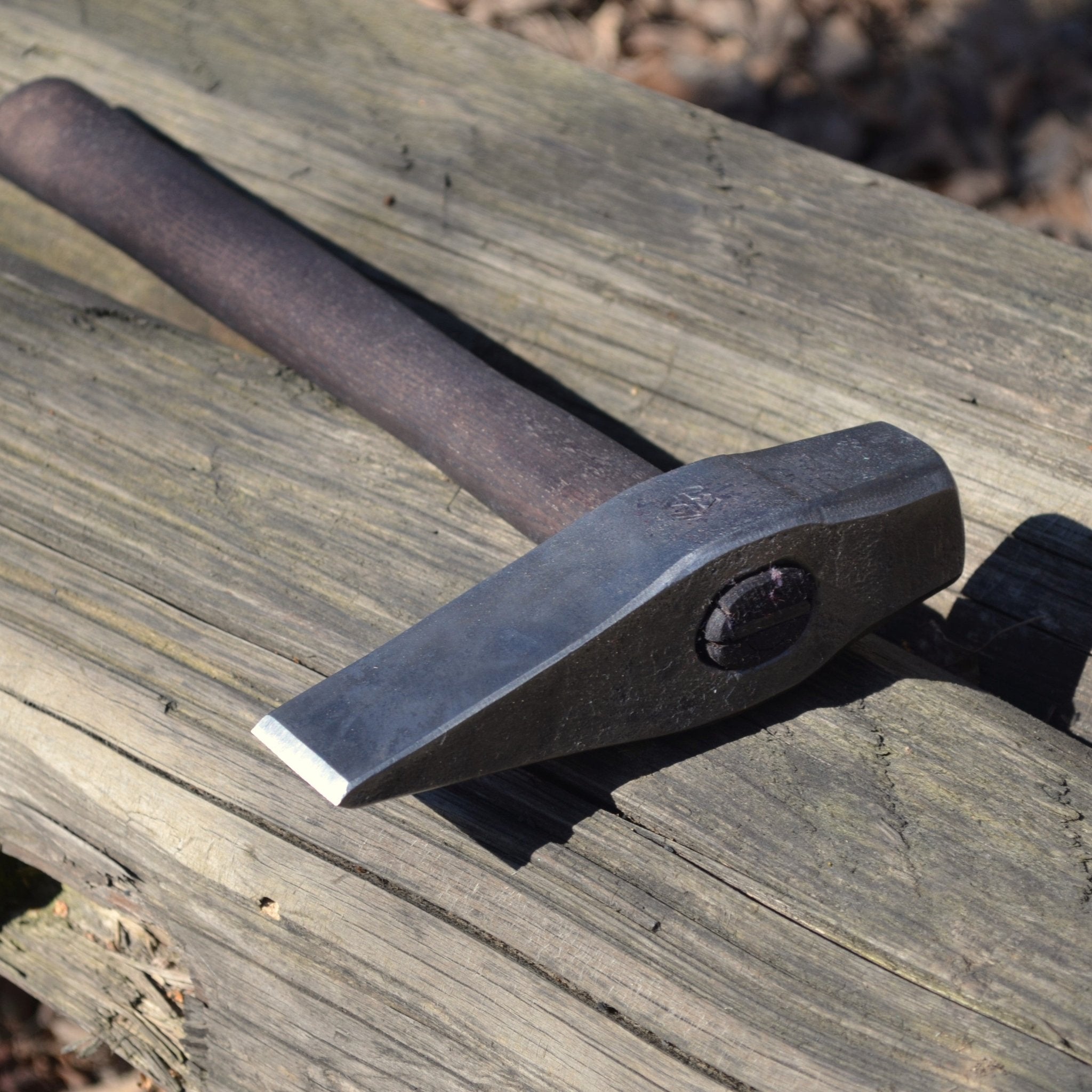
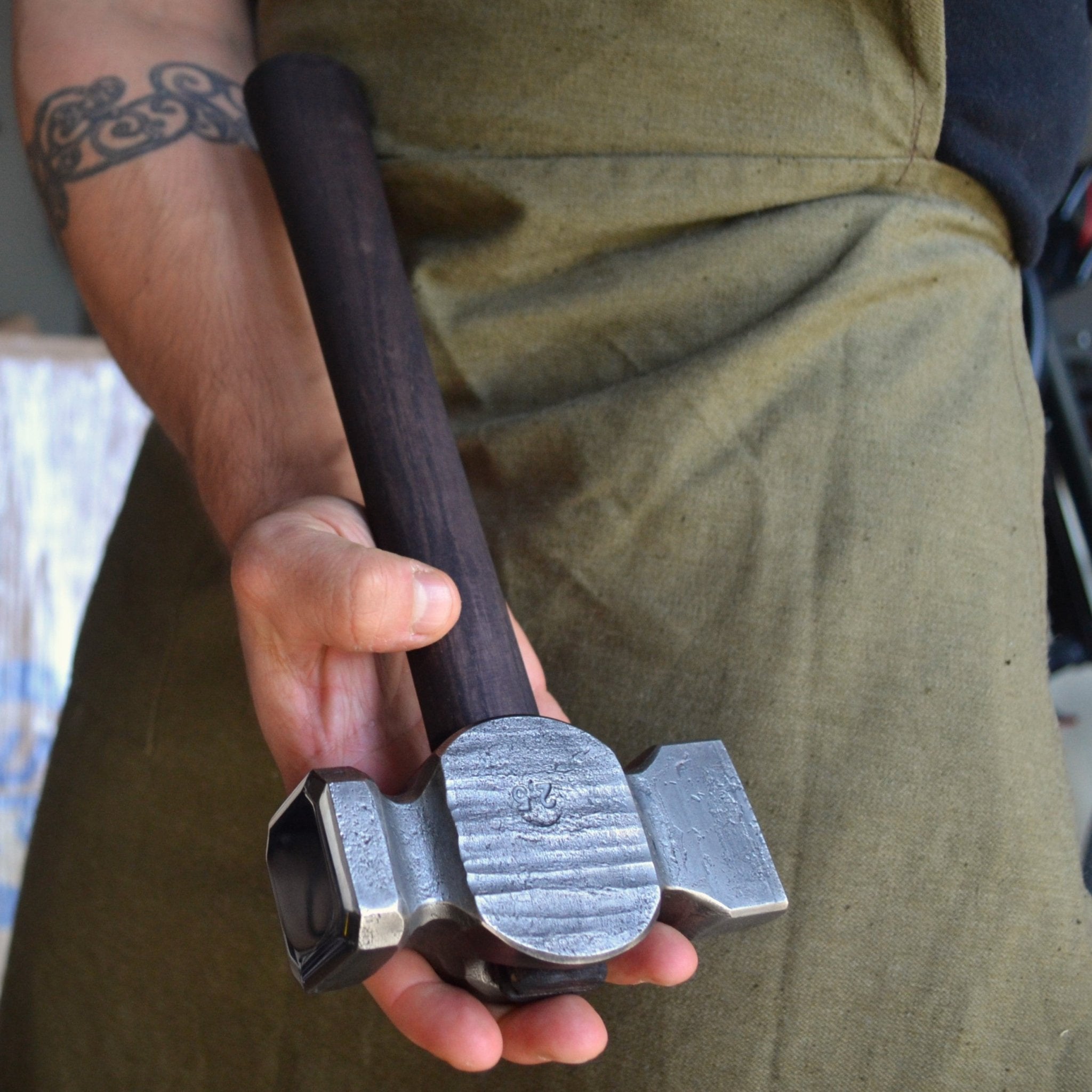
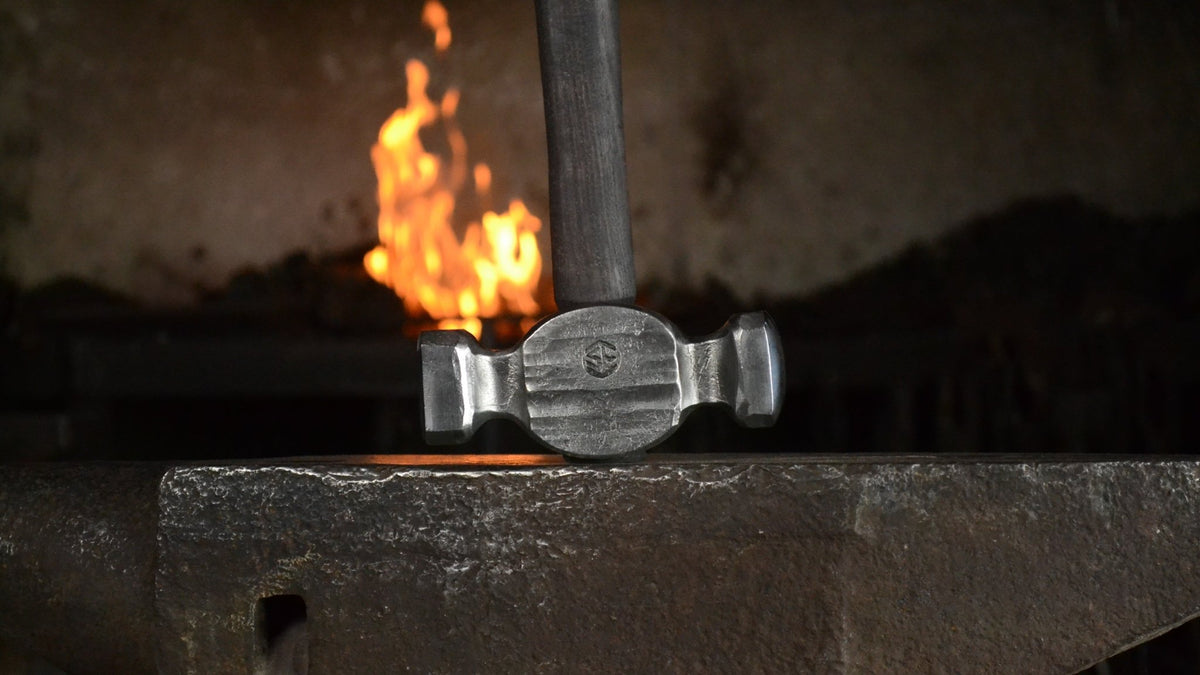
The defining feature of a Rounding Hammer is the combination of two distinct face geometries on a single head:
Rounding Face: Resembles a sphere segment (or a domed surface). This is the main secret to the hammer's productivity, allowing for rapid and aggressive displacement of hot metal.
Flat Face: Features slightly radiused bevels and a subtle crown for finishing and flattening surfaces.
What a Rounding Hammer Is Used For
The primary purpose of the rounding face is rapid drawing out and moving of metal.
Multi-directional metal displacement: A standard flat hammer or a cross-peen hammer draws metal out primarily in one or two directions. The rounding face of a Rounding Hammer pushes incandescent steel outward radially (in all directions simultaneously).
Forging complex geometries: It allows you to forge bevels, create bends, form fullers, or isolate stock without the risk of leaving sharp cold shuts or marks from hard hammer edges.
Versatility: By altering the angle at which the hammer contacts the stock, you can emulate the action of a straight, cross, or diagonal peen, saving time on tool changes.
How to Forge with It: Techniques and Principles
Working with a Rounding Hammer requires an understanding of how hot metal responds to concentrated pressure.
1. Heavy Stock Removal and Drawing Out (Rounding Face)
Concentrated force: Because the contact patch of the rounding face is relatively small, the entire impact force is focused on a small surface area, causing the steel to flow quickly.
Directional control (Angle control):
Striking flat and parallel to the anvil face spreads the metal evenly in all directions.
Slightly angling the hammer head directs the displacement primarily toward the tilt.
Utilizing anvil edges: When forging tangs or tapers, placing the stock over the anvil's far edge or horn creates a double-drawing effect — the rounding face depresses the top while the anvil's radius draws out the bottom.
2. Planishing and Finishing (Flat Face)
After shaping or extending the workpiece with the rounding face, the surface will feature rounded hammer marks.
Flip the hammer to the flat face and use light, rhythmic planishing blows to smooth the metal out to a clean finish.
3. Grip and Hammer Mechanics
Proper grip: Avoid choking up near the hammer head. Hold the handle closer to the base to maximize leverage and efficiency.
Working from the shoulder and elbow: Drive the blow using gravity and body mechanics rather than wrist muscle alone. Direct the impact and let the anvil's natural rebound bring the hammer back up.
Accuracy over force: Due to the spherical face, precision is key to prevent glancing blows. Start with controlled, medium-intensity strikes to get a feel for how the tool responds on the metal.