Article: What Is Forging? How Forging Changes Metal and Why Forged Tools Are Stronger

What Is Forging? How Forging Changes Metal and Why Forged Tools Are Stronger
My grandfather once said about his friend, a war veteran:
“That man is tougher than a forged nail.”
I have always liked this expression. For generations, people have understood that properly forged metal can withstand tremendous loads and punishment. Blacksmiths have relied on forged tools, weapons, axes, hammers, and countless other objects long before modern metallurgy could explain exactly what happens inside the metal during forging.
Today, we understand much more about the process. Forging does not simply change the shape of a piece of metal. Under the right conditions, it also changes its internal structure, influences grain flow, refines the microstructure, and improves critical properties such as tensile strength, toughness, and fatigue resistance.
From a traditional hand-forged blacksmith hammer to a high-performance automotive wheel, the basic principle remains identical: the way you shape metal directly influences what happens inside it.

What Is Forging?
Forging is a manufacturing process in which metal is shaped through controlled plastic deformation. Instead of melting metal and pouring it into a mold, forging starts with a solid billet. The metal is heated to its plastic state and worked using compressive forces applied by a hammer, press, or specialized forging dies.
Traditional blacksmithing is one of the oldest and most proven forms of forging. A blacksmith heats high-carbon steel until it becomes malleable, places it on an anvil, and uses repeated hammer strikes to deform and shape it. Industrial forging follows the exact same mechanical principle, utilizing modern hydraulic presses to deliver enormous forces with pinpoint accuracy.
The key takeaway is that forging changes far more than the external silhouette of the tool — it fundamentally transforms the internal metallurgy of the steel.
What Happens to Metal During Forging?
Steel consists of microscopic crystal structures known as grains. Their size, shape, alignment, and orientation dictate the overall mechanical behavior and durability of the final tool.
When steel is cast, its structure forms as molten metal solidifies. Depending on the alloy and cooling speed, casting can leave inherent flaws such as chemical segregation, microscopic porosity, and shrinkage cavities. Forging eliminates these weaknesses through plastic deformation — the metal literally flows under impact.
As hot steel is hammered, its internal grain structure aligns with the direction of the material flow. This creates what metallurgists refer to as continuous grain flow. In a properly forged component, this flow is directed parallel to the primary load paths, dramatically increasing resistance to impact, shear stress, and mechanical fatigue.
Does Forging Make Metal Denser?
Forging is often described as a process that "compresses" or "densifies" steel. While this is a helpful simplification, the actual physical transformation is far more dynamic. Under proper hot-working conditions, compressive forces close internal micro-cavities and redistribute non-metallic inclusions.
Furthermore, hot deformation triggers recrystallization, creating new, refined grain structures within the steel. Therefore, forging is not merely hardening steel by squeezing it; it is a holistic microstructural refinement that improves:
- Continuous directional grain flow;
- Grain size refinement and uniform microstructure;
- Reduction of internal porosity and casting voids;
- Even distribution of alloy inclusions;
- Enhanced mechanical anisotropy and impact toughness.
Because the final properties depend heavily on the working temperature, deformation ratio, and subsequent heat treatment, true professional forging requires precise temperature control rather than raw force.
Forged vs. Cast Metal: A Direct Comparison
While modern casting produces excellent parts for stationary machinery, high-impact tools demand the mechanical superiority of forged steel. Below is a breakdown of how the two manufacturing methods compare:
|
Feature / Property |
Forged Metal |
Cast Metal |
|
Starting State |
Solid heated steel billet |
Liquid molten metal |
|
Forming Method |
Controlled plastic deformation |
Solidification inside a mold |
|
Grain Flow |
Continuous & oriented along tool geometry |
Random, unaligned solidification grain |
|
Internal Integrity |
Closed cavities, reduced internal defects |
Potential shrinkage, voids, and porosity |
|
Microstructure |
Refined and homogenized through hot deformation |
Coarse grain structure dependent on cooling rate |
|
Impact Resistance |
Exceptional toughness and fatigue life |
Higher risk of brittle failure under shock loads |
Why Are Blacksmith Hammers Forged?
A hand-forged blacksmith hammer operates under some of the most demanding physical conditions imaginable. Every strike against an anvil delivers high-energy shockwaves directly into the hammer head. Over years of heavy forging, a tool head endures millions of high-impact force cycles.
A reliable blacksmith hammer cannot rely on hardness alone; it requires a precise balance of:
-
High tensile strength;
-
Extreme impact toughness;
-
Resistance to chipping, spalling, and fatigue cracks;
-
Optimum face hardness (typically 55–58 HRC);
-
Proper weight distribution and striking ergonomics.
Forging and Heat Treatment Work Together
Forging prepares the steel, but heat treatment unlocks its full potential. The striking faces require sufficient hardness to resist mushrooming, yet over-hardening creates dangerous brittleness. At Strict Blacksmith, we combine high-carbon tool steel with controlled hot forging and precise oil quenching to achieve maximum structural integrity.
Real-World Engineering: From Car Wheels to Forged Tools
The advantages of directional grain flow extend far beyond the forge. Consider high-performance forged aluminum automotive wheels. Unlike cast wheels, forged wheels begin as solid billets squeezed under thousands of tons of pressure. This engineered grain structure allows forged wheels to absorb road impacts, potholes, and severe cornering loads while remaining significantly lighter and stronger than cast alternatives.
Whether manufacturing aerospace landing gear or a custom blacksmithing tool, engineering the internal grain flow is the key to producing components built for extreme service.
What to Look for When Choosing a Hand-Forged Hammer
When selecting your next forging tool, the word "forged" should only be your starting benchmark. To ensure a tool will last generations, evaluate the complete manufacturing standard:
-
Steel Selection: Premium tool steels (such as AISI 1045, C80W2, or alloy steels) selected for specific tool requirements;
-
Forging Control: Proper forging temperatures that avoid overheating or surface decarburization;
-
Precision Heat Treatment: Differential tempering to ensure a hard striking face and a shock-absorbing eye;
-
Ergonomics & Balance: Proper eye drift alignment and secure handle fitment.
From Steel Billet to Hand-Forged Tools at Strict Blacksmith
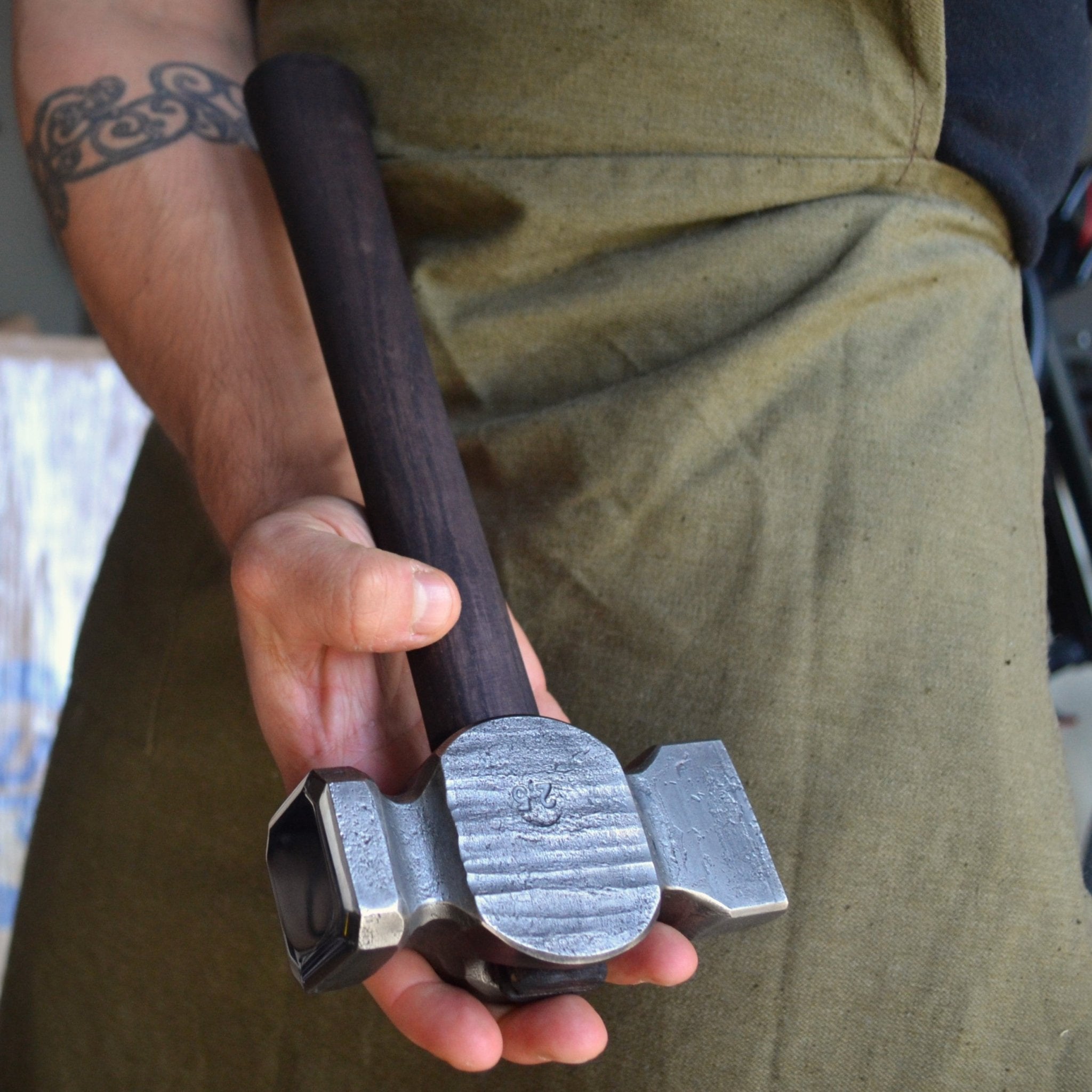
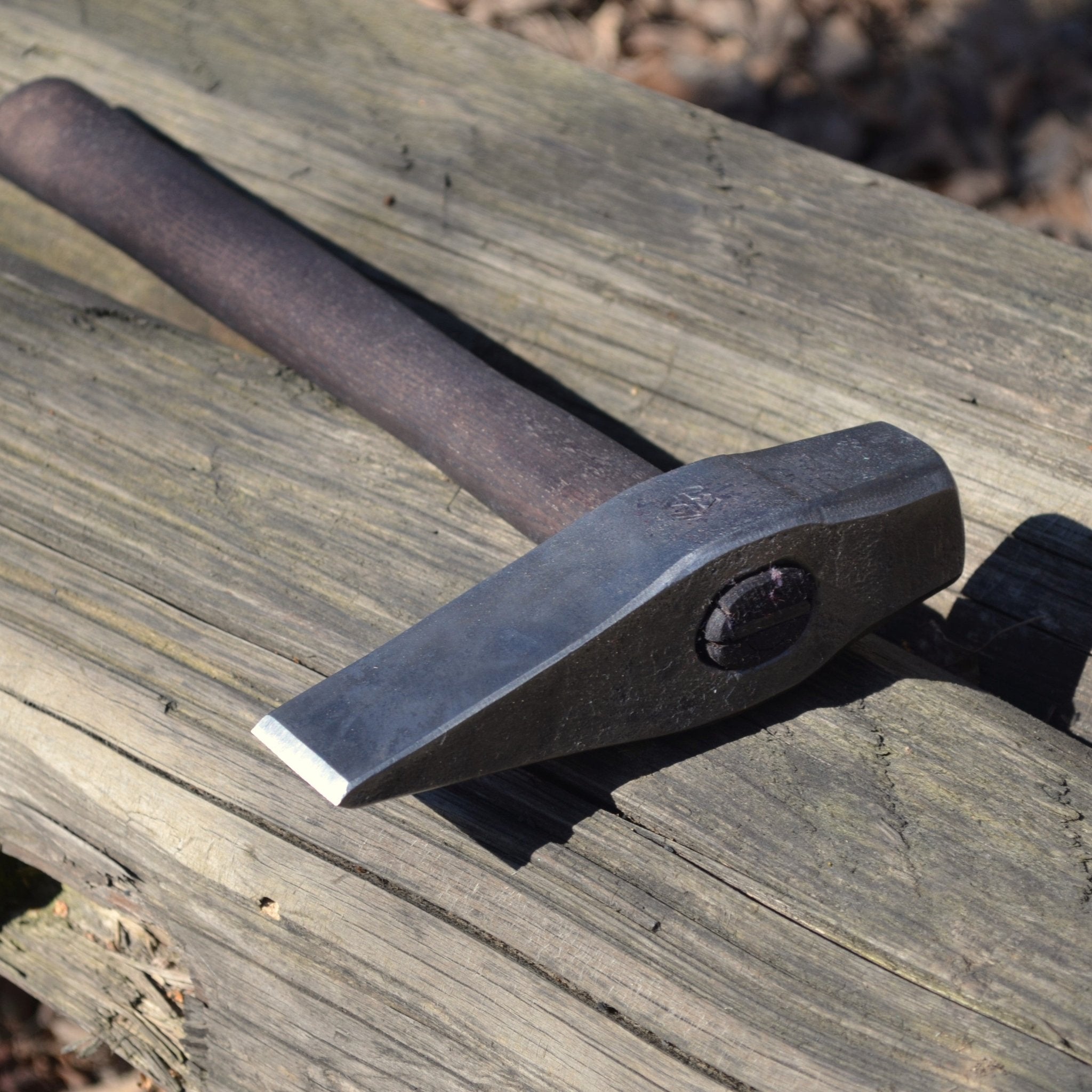
At Strict Blacksmith, we build our forged hammers around a simple rule: never compromise on internal steel quality. We hot-forge our hammer heads from solid tool steel billets, carefully shaping every peen, flatter face, and eye drift under controlled thermal conditions.
We do not simply machine tools out of cold stock or rely on quick cast molds. We shape the steel with purpose so that the finished tool serves as an extension of your arm at the anvil.
A Note on Forging Temperatures & Steel Care
For fellow blacksmiths crafting their own tools, remember that forging can enhance metal quality — but improper heat management can easily ruin good steel. Overheating steel or soaking it at high temperatures for too long causes excessive grain growth, severe scaling, and surface decarburization (loss of carbon).
Knowing when and at what temperature to strike steel is just as important as how hard you hit it. In our upcoming articles, we will dive deep into forging temperature zones, thermal cycling, and how to prevent carbon loss during heating.

Final Thoughts
Forging remains one of humanity's most essential metalworking arts. From the ancient anvil to modern high-tech engineering, the foundational objective has never changed: shape the metal while engineering what happens inside it.
My grandfather's old saying was more than just praise for a tough friend — it was a tribute to a time-tested truth. When steel is shaped with knowledge and purpose, it becomes nearly unbreakable.