How to Choose the Perfect Blacksmithing Hammer: A Guide for Beginners and Professionals
The hammer is a blacksmith's primary tool. Choosing the right one affects not only the speed and precision of your work but also the level of wrist fatigue you experience by the end of the day. At the StrictBlacksmith online workshop, we handcraft our blacksmithing tools, pouring years of experience into every piece.
But how can you avoid feeling overwhelmed by the variety of shapes, weights, and steel types when shopping online? We break it all down in this technical guide.

Face Geometry: Shape Matters
Different tasks in the forge require different working face geometries. When choosing a hammer, consider its intended use:
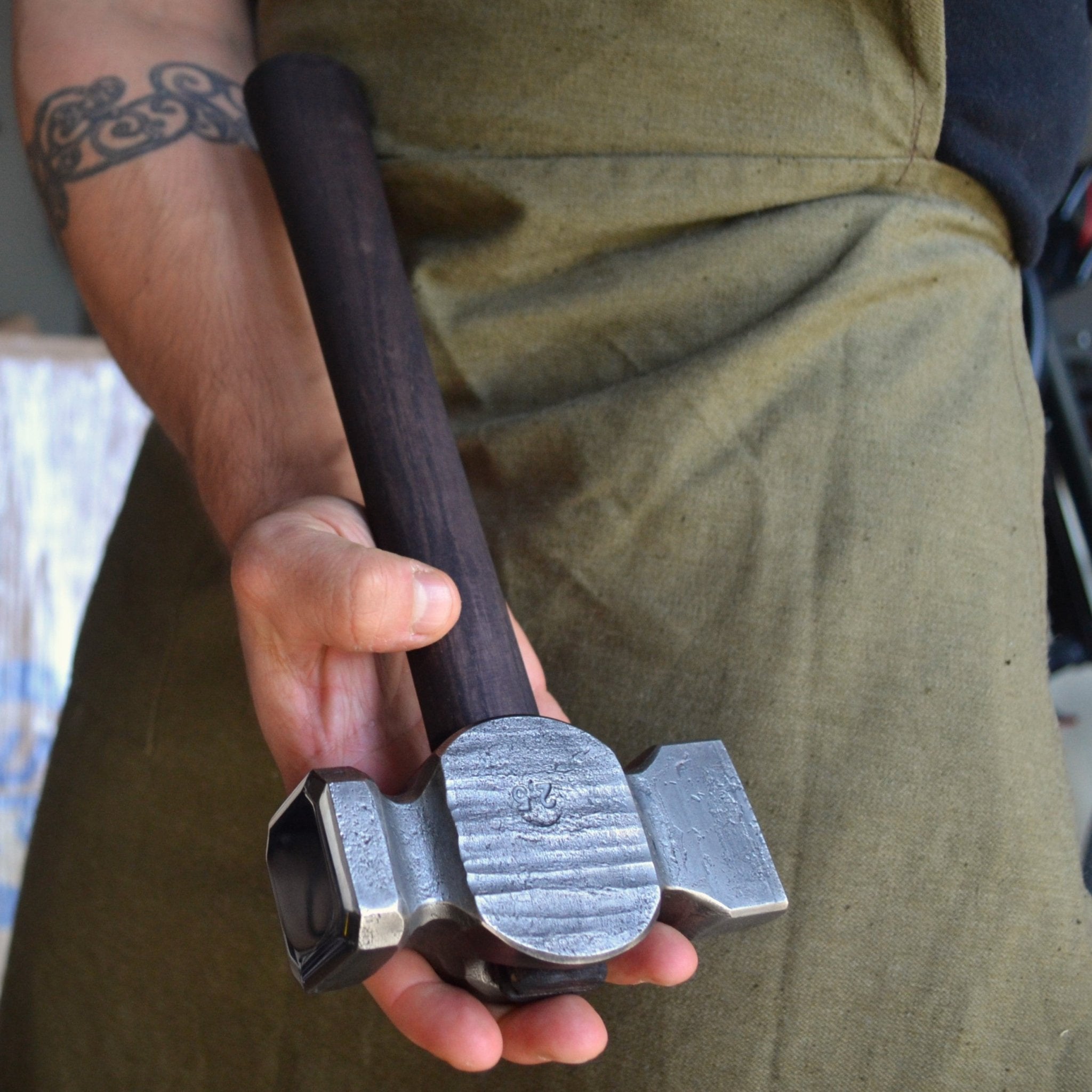
Rounding Hammers: A favorite among many smiths. The rounded face allows for even metal distribution in all directions during drawing-out operations. They are highly effective for shaping stock, rounding edges, and general blacksmithing tasks. Our models combine a rounded face and a flat face for maximum versatility.
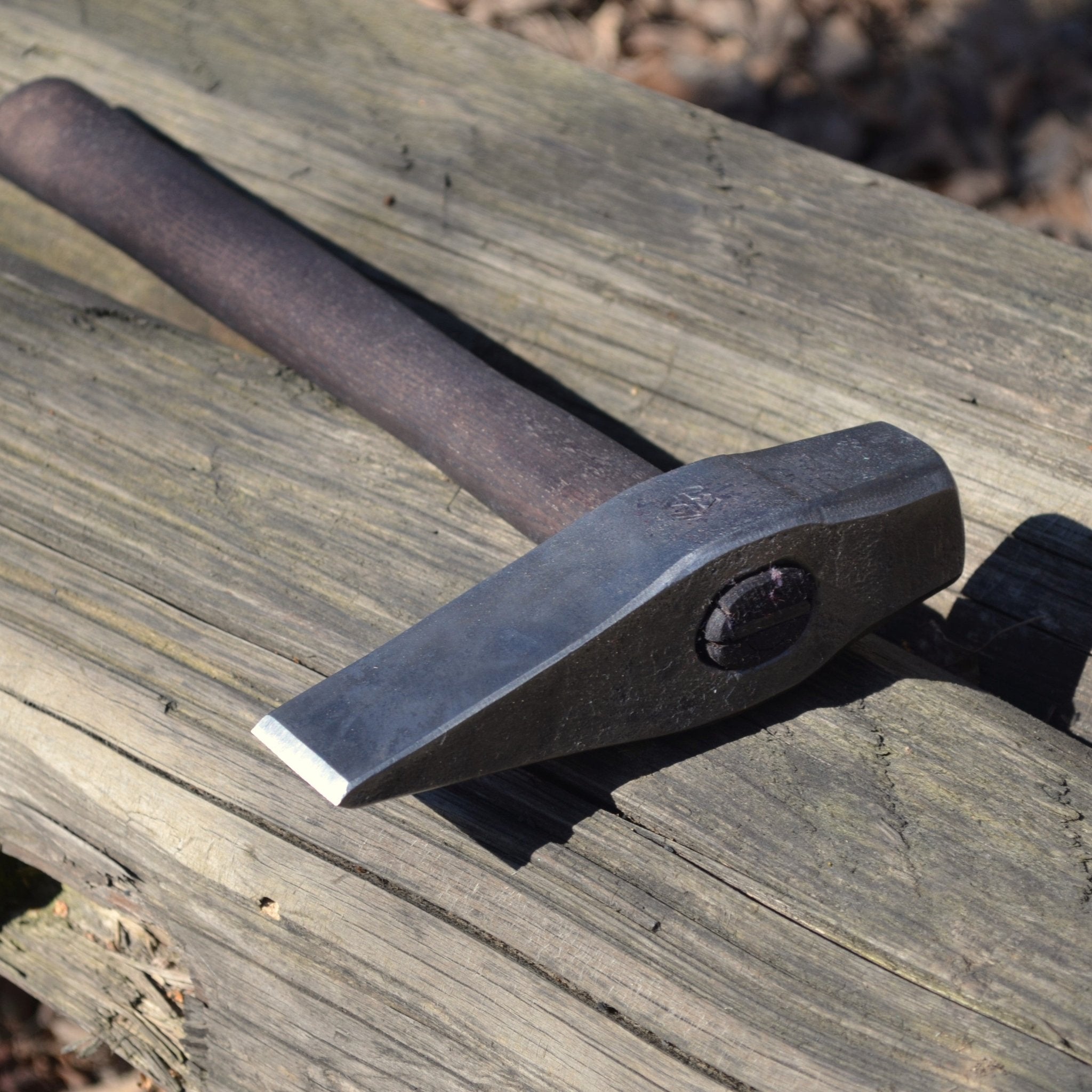
Cross Peen Hammers: These feature a wedge-shaped peen positioned perpendicular to the handle. They are indispensable when you need to draw out metal in a specific direction (for example, when lengthening a bar or shaping narrow elements).
Straight Peen Hammers: Here, the wedge-shaped peen is positioned parallel to the handle. This geometry is ideally suited for deep corner penetration, forming internal radii, and specific metal-expanding operations.
Steel Grade: Why do we choose AISI AISI 1045?
The quality of the steel determines the lifespan of your hammer and whether the striking face will begin to "mushroom" (deform) after the first few thousand blows.
For the majority of our professional hammers, we use AISI 1080 high-carbon steel.
The carbon content in this steel allows for an ideal balance between strength and resilience. It responds excellently to heat treatment, ensuring high wear resistance on the working face—allowing it to withstand hours of striking hot metal without chipping.
Rockwell Hardness (HRC): The Gold Standard
The hardness of the striking face is a critical parameter often queried by professionals. A hammer that is too soft deforms quickly, while one that is too hard may become brittle and produce dangerous chips upon impact with another tool.
Our hammers undergo professional zone or full hardening, maintaining an optimal hardness range of 50–55 HRC (depending on the model—for instance, popular lines are rated at 50–52 HRC or 52–55 HRC).
This ensures the working surface remains wear-resistant, maintaining perfect striking geometry for years to come.
Weight and Balance: How to Find the Right Hammer for You?
The tool's weight depends directly on the nature of your projects:
2 lbs: An excellent choice for precision artistic forging, fine detailing, and extended work sessions without putting excessive strain on your arm.
3 lbs and up: Powerful workhorses for massive stock, rapid upsetting, and heavy forging tasks.
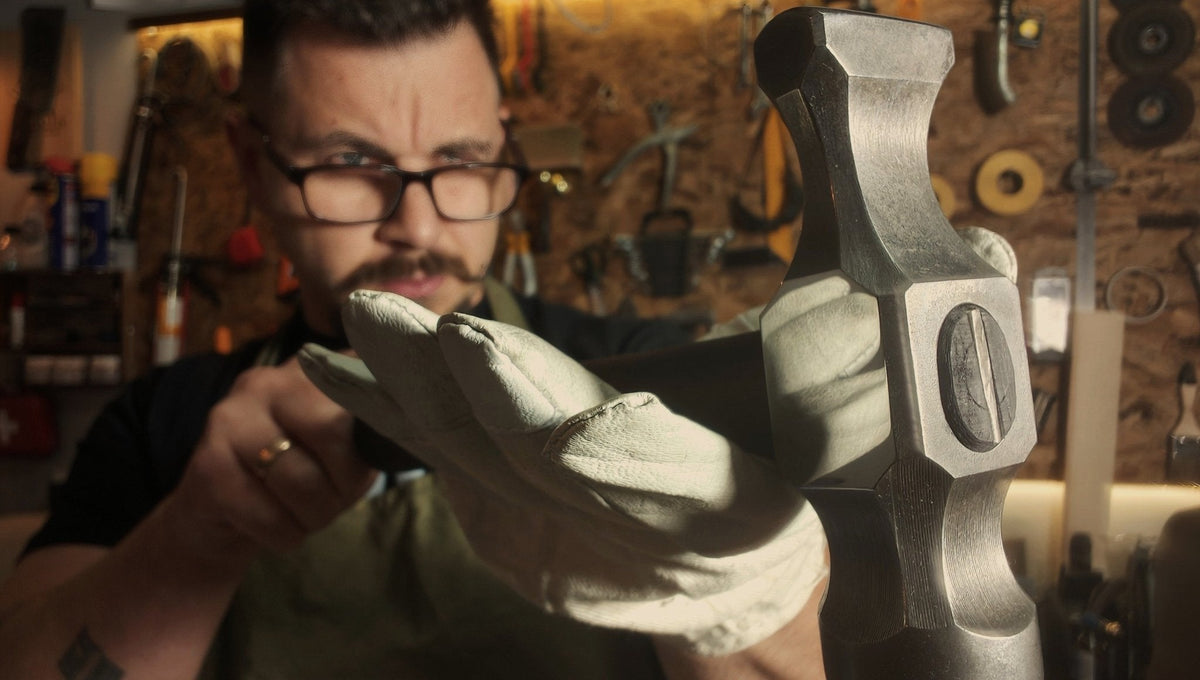
Beyond raw weight, balance is critical. A properly hung hammer should feel like a natural extension of your wrist rather than pulling your hand down. We use ergonomic handles made of durable, oil-finished ash; they dampen impact vibrations and sit securely in the palm, preventing slippage.
Which One Should You Choose?
If you are setting up your first all-purpose forge:
Start with a Square-Circle Rounding Hammer (a versatile favorite for a wide range of tasks) or a classic Cross Peen Hammer weighing around 2–3 lbs.
In the StrictBlacksmith catalog, every hammer is crafted by practicing smiths, for smiths. Choose the tool that will become your reliable partner at the forge!