Straight Peen Hammer: What Is It Used For in Blacksmithing?
The Straight Peen Hammer is a traditional blacksmithing tool designed for controlled metal movement and shaping. Although it may not be as commonly discussed as the Cross Peen Hammer, it has an important place in the blacksmith's workshop.
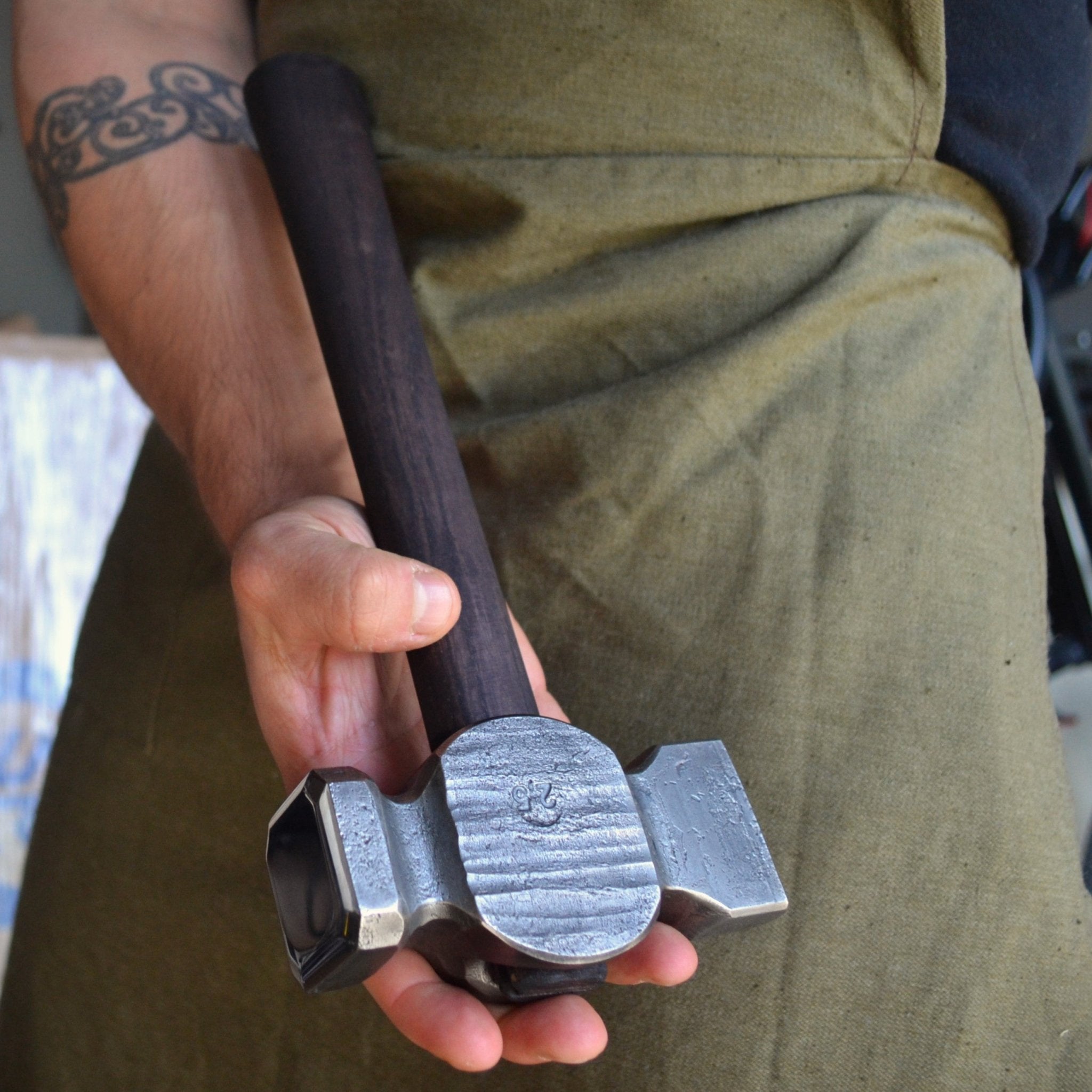
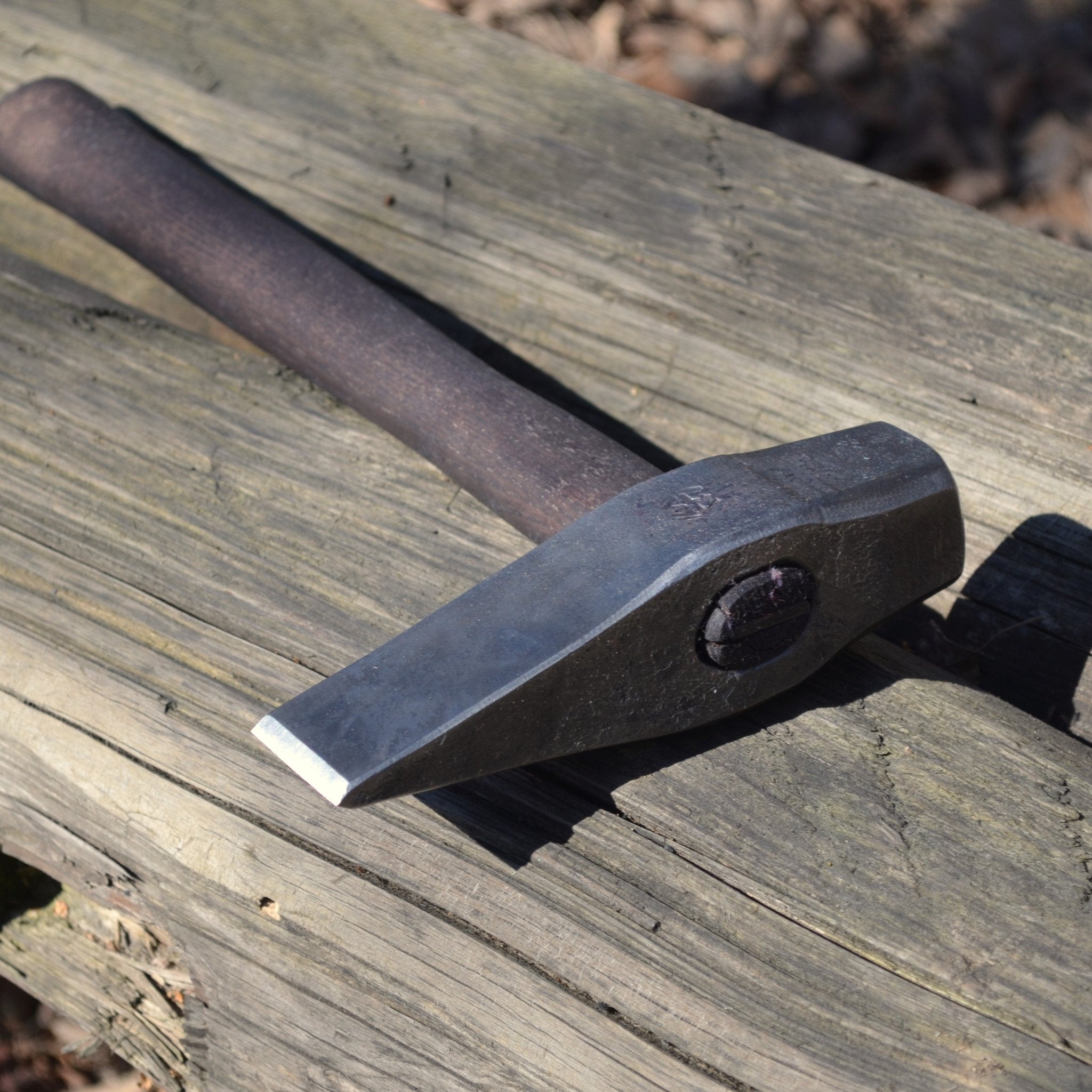
Its distinctive feature is the narrow, wedge-shaped peen that runs parallel to the hammer handle. This particular orientation allows the blacksmith to move metal in a specific direction, making it especially useful for spreading, widening, and shaping steel.
But what exactly makes this hammer useful, and why would a blacksmith choose it over a regular flat-faced hammer?

How Does a Straight Peen Hammer Work?
The most important thing to understand about a Straight Peen Hammer is how its geometry affects metal movement.
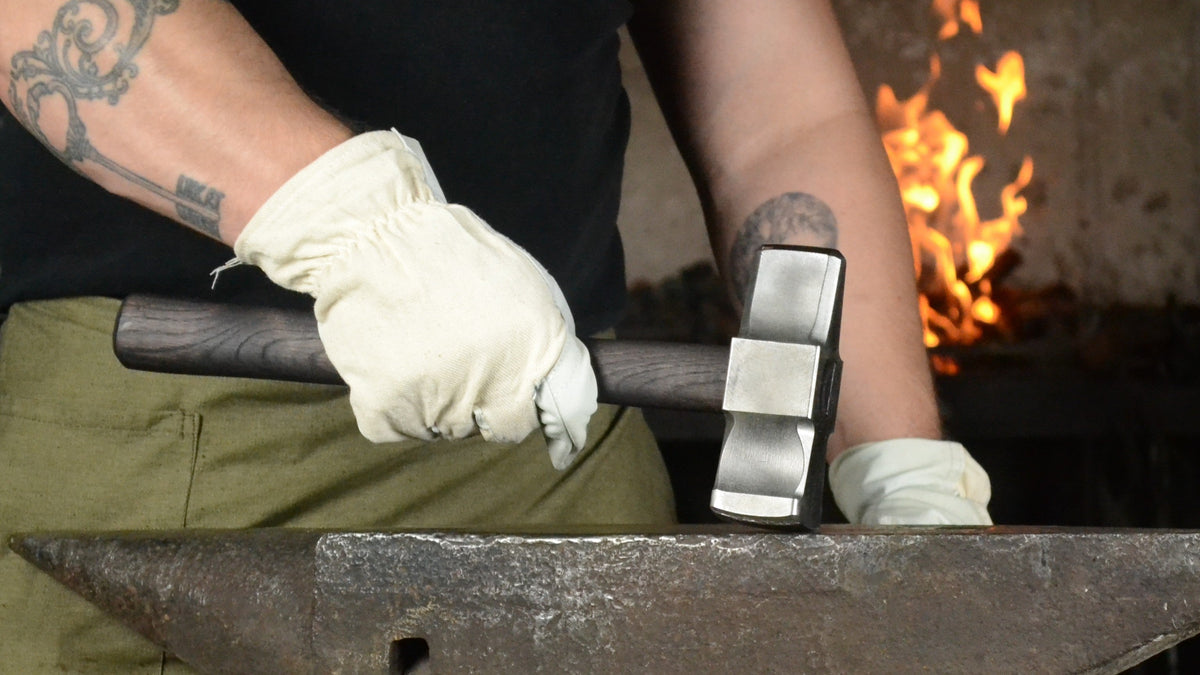
When the peen strikes hot steel, the material tends to spread perpendicular to the length of the peen. Because the peen runs parallel to the handle, the metal is pushed sideways, across the direction of the handle.
This gives the blacksmith a way to control the direction in which material moves.
Unlike a flat hammer face, which distributes force over a relatively large surface, the narrow peen concentrates the impact along a smaller area. This makes it easier to move material in a particular direction without unnecessarily deforming the surrounding areas.
It is especially useful when you need to widen a section of steel, spread material locally, or control the shape of a workpiece during forging.
What Is a Straight Peen Hammer Used For?
There are several important applications where a Straight Peen Hammer can make a noticeable difference.
1. Spreading and Widening Metal
One of its primary applications is spreading metal sideways. When working with flat stock or rectangular bars, the Straight Peen helps increase the width of the material while controlling its thickness.
This is particularly useful when forging wider sections from narrower stock.
2. Drawing Out Material
A Straight Peen can also be used for drawing out steel. By controlling the position and direction of each strike, the blacksmith can gradually reduce the cross-section and extend the material.
The orientation of the peen makes it particularly convenient when the desired metal movement is across the width of the workpiece.
3. Forging Decorative Elements
Straight Peen Hammers are useful when producing decorative blacksmithing elements. They can help shape leaves, widen sections of ornamental steelwork, and create controlled transitions in the material.
When making decorative details, the ability to move metal in a specific direction is often more important than simply delivering a powerful blow.
4. Localized Metal Movement
Another advantage is the ability to concentrate force in a relatively narrow area. This is useful when you want to move a particular section of a workpiece without flattening the entire surface.
It gives the blacksmith additional control over the shape and distribution of material.
Why Use a Straight Peen Instead of a Flat-Faced Hammer?
A regular flat-faced hammer is an essential tool in every blacksmith's workshop. However, its broad striking surface does not always provide the directional control needed for certain forging operations.
The Straight Peen offers a different approach.
Its narrow striking edge concentrates the impact and makes it easier to spread material in a chosen direction. Rather than simply flattening the surface, you can use it to influence how the steel flows.
Of course, this requires proper technique. The angle of the hammer, the position of the workpiece, and the temperature of the steel all affect the final result.
The Straight Peen is not intended to replace a regular forging hammer. It is another tool that expands the blacksmith's ability to shape metal.
Straight Peen vs. Cross Peen Hammer: What Is the Difference?
The Straight Peen and Cross Peen Hammers work on the same basic principle. Both have a narrow, wedge-shaped peen designed to concentrate impact and control metal movement.
The main difference is the orientation of the peen relative to the handle.
- Straight Peen: The peen runs parallel to the handle. It moves metal perpendicular to the handle's direction, making it particularly useful for lateral spreading.
- Cross Peen: The peen runs perpendicular to the handle. It moves metal along the direction of the handle, making it especially useful for drawing out material along the length of a bar.
Neither hammer is inherently better than the other. They simply offer different ways to control metal movement.
For a blacksmith who regularly works with different shapes and sizes of steel, having both tools provides greater flexibility and control during forging.