Artikel: Blacksmith Cross Peen Hammer: What It Is Used For and How to Choose the Right One
Blacksmith Cross Peen Hammer: What It Is Used For and How to Choose the Right One
The cross peen hammer is one of the most popular and versatile tools in a blacksmith’s workshop. From drawing out steel bars to spreading hot metal, forging shoulders, and shaping decorative ironwork, it gives the blacksmith control over how the metal moves with every blow.
What makes this hammer special is its two working ends. One has a flat face for general forging, while the other has a wedge-shaped peen that allows you to move metal in a more controlled direction. Together, they make the cross peen a practical choice for everyday forging.

What Is a Cross Peen Hammer?
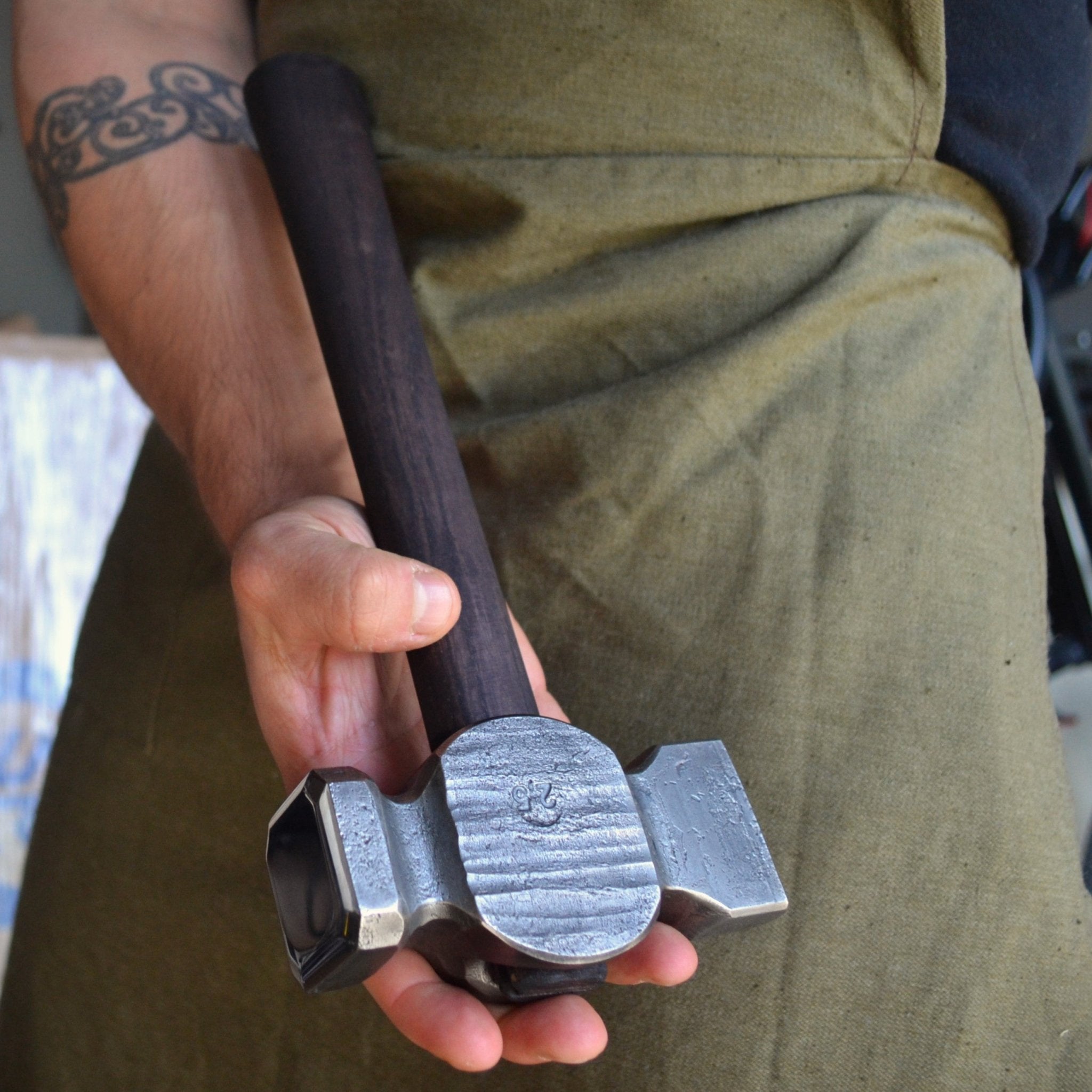
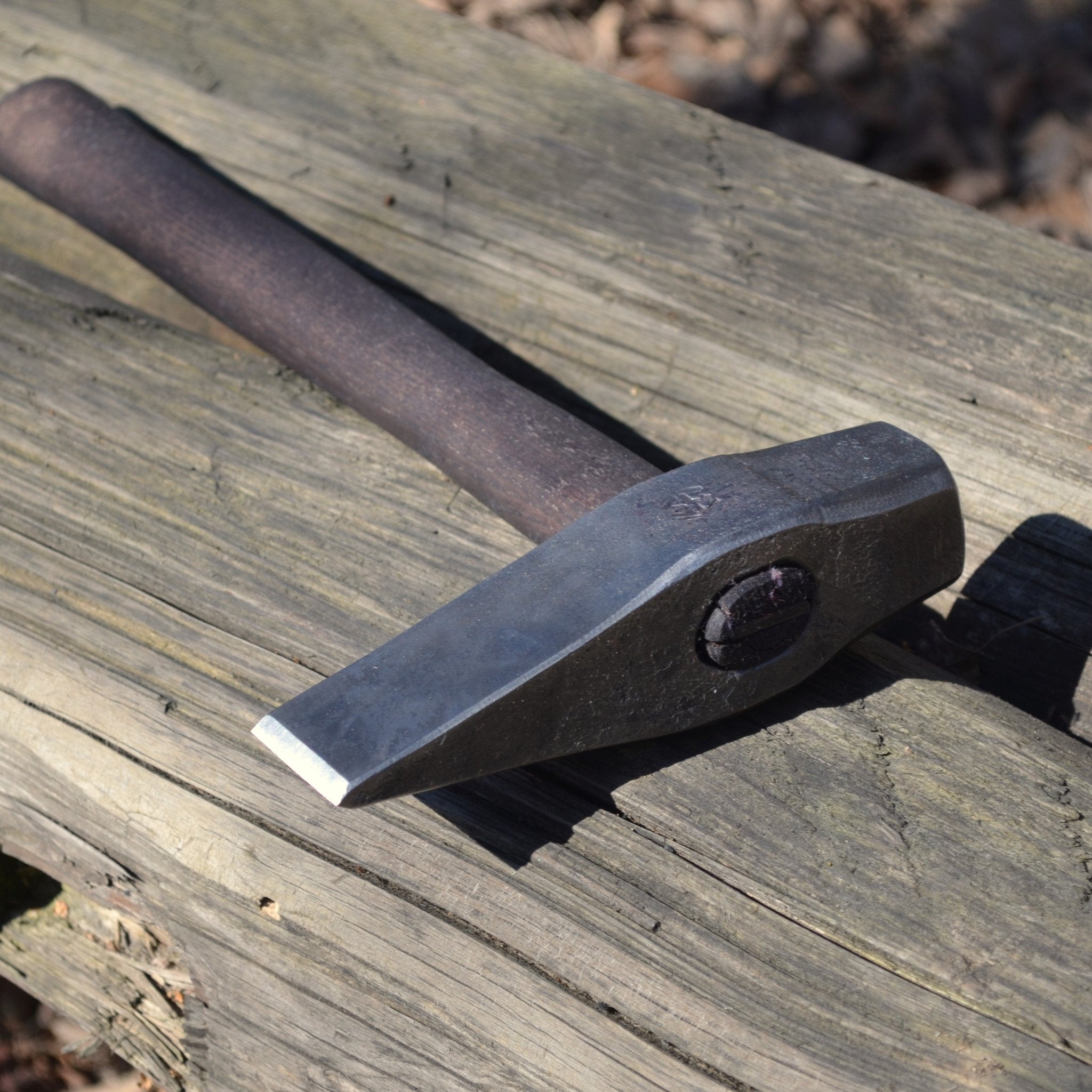
A blacksmith cross peen hammer has a traditional hammer face on one end and a wedge-shaped peen on the other. The peen is positioned perpendicular to the handle, which is what distinguishes it from a straight peen hammer.
Each end serves a different purpose.
The flat face is used for general forging, moving metal, refining shapes, and smoothing the ridges left by the peen.
The cross peen concentrates the impact along a narrower line. When struck against hot steel, it pushes the material away from the contact area, allowing the blacksmith to spread and draw out the metal in a controlled direction.
This combination makes the cross peen useful for a wide range of forging operations without constantly changing tools.
What Is a Cross Peen Hammer Used For?
1. Drawing Out and Spreading Steel
One of the main jobs of a cross peen hammer is drawing out steel — reducing its cross-sectional thickness while increasing its length or width.
The wedge-shaped peen concentrates the force into a narrower area than the flat face. This helps move the metal more efficiently in a chosen direction.
For example, when forging a flat bar from thicker stock, you can use the peen to spread the steel, then turn the hammer around and use the flat face to refine the surface.
This alternating technique is especially useful when working by hand, without a power hammer.
2. Forging Shoulders and Transitions
A shoulder is a change in the cross-section of a forged piece. Shoulders are important when creating steps, transitions, and defined sections in a workpiece.
The cross peen can help establish these transitions by concentrating force along a controlled line. It is useful when preparing a bar for a narrower section, shaping the transition between different thicknesses, or working on the geometry of a forged component.
For more precise shoulders, the hammer is often used together with the edge of the anvil or other appropriate tooling.
3. Forging Decorative Ironwork
Cross peen hammers are useful for ornamental blacksmithing, particularly when shaping flat bars, tapers, and decorative elements.
They can help spread material into wider sections, refine transitions, and establish the basic shape of leaves and other forged details. The flat face is then used to clean up the surface and refine the form.
For decorative work, control is more important than simply hitting harder. A properly shaped peen helps direct the deformation, while a well-dressed face reduces unwanted marks.
4. Forging Tapers and Points
A taper is a gradual reduction in the cross-section of a bar toward one end. It is used in everything from hooks and brackets to tools, furniture components, and decorative ironwork.
The cross peen can help move material toward the desired shape by concentrating the blow along a narrow area. The blacksmith can then rotate the workpiece and use the flat face to even out the shape.
The exact technique depends on the direction of the taper and the shape of the stock. The cross peen is one useful option, rather than a replacement for every other hammer or forging technique.
5. General Forging and Surface Refinement
Despite its wedge-shaped end, a cross peen hammer is not just a specialist tool. In many workshops, the flat face does most of the everyday work.
It can be used for general shaping, flattening raised areas, refining forged sections, and cleaning up the ridges created by the peen.
This is one reason the cross peen is such a practical hammer to own: you can perform rough shaping and subsequent refinement with the same tool.
6. Working on Knives, Tools, and Small Forged Components
A cross peen can also be useful when forging knife blanks, small tools, and other components where directional control matters.
It helps move material in a particular direction and can be used to establish tapers or redistribute stock before refining the shape with the flat face.
The appropriate hammer weight depends on the size of the workpiece and the amount of material that needs to move. For smaller work, a lighter hammer may offer better control, while heavier stock generally requires more energy per blow.
How to Choose the Right Cross Peen Hammer
Choosing a cross peen hammer is not simply about buying the heaviest one you can comfortably lift. The right hammer should match your work, your technique, and the amount of control you need.
1. Choose the Right Weight
Hammer weight affects both the energy of the blow and how easily you can control the tool over a long forging session.
Here is a practical starting point for choosing a hammer:
- 2–2.5 lb: A versatile range for general hand forging and a useful starting point for many blacksmiths.
-
3–3.5 lb: Suitable for heavier hand forging and moving more substantial stock, provided you can maintain control.
These are general guidelines, not strict rules. The ideal weight also depends on the dimensions and temperature of the steel, the anvil, the handle, and your individual technique.
If you are buying your first cross peen, a hammer around 2 lb is a reasonable starting point for many people. If you already work with heavier stock, you may prefer something in the 2.5–3.5 lb range.
Remember that a heavier hammer does not automatically make you a more productive blacksmith. If it reduces your accuracy or causes fatigue, you may actually move metal less efficiently.
2. Pay Attention to the Shape of the Peen
The shape of the peen affects how the steel moves and what marks remain on its surface.
A peen that is too narrow or has excessively sharp edges can leave deep grooves that are difficult to remove. A properly shaped working surface should have suitable width and smoothly rounded transitions, allowing the metal to flow without creating unnecessarily sharp impressions.
The ideal geometry depends on the type of forging you do. A hammer intended for general blacksmithing should offer a useful balance between directional control and ease of surface refinement.
3. Check the Flat Face
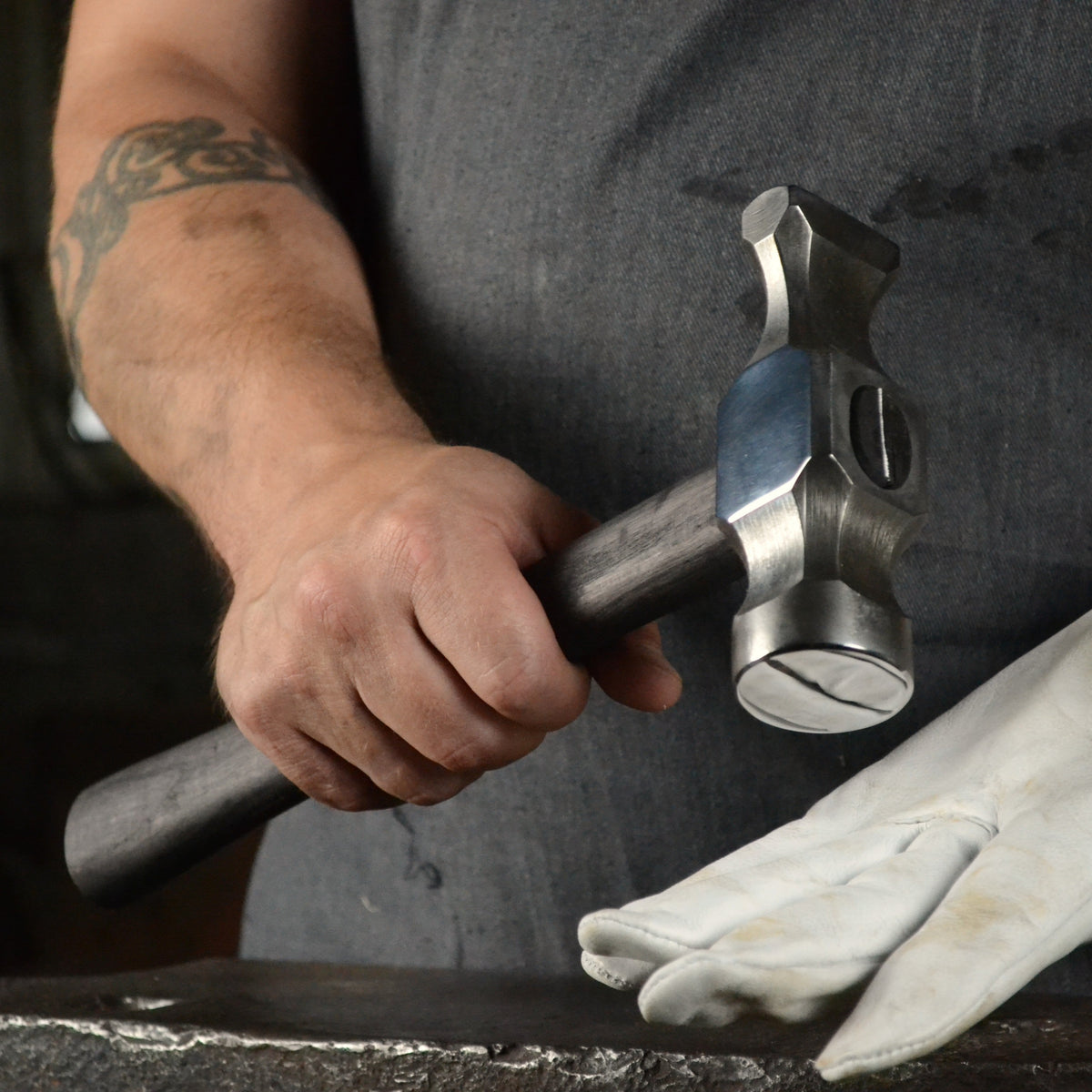
The flat face should not necessarily be perfectly flat with sharp corners. Many blacksmithing hammers benefit from a slightly crowned face and smoothly rounded edges.
This helps reduce deep marks when the hammer does not land perfectly parallel to the workpiece.
A properly dressed face is especially important if you want to produce clean surfaces without spending excessive time removing hammer marks afterward.
4. Consider Steel and Heat Treatment
A quality cross peen hammer needs more than a suitable shape. The head must also be manufactured and heat-treated appropriately for repeated impact.
Steel grade provides useful information about the material's potential, but it does not tell the entire story. Heat treatment, hardness, toughness, and the quality of the forging and finishing processes all contribute to the performance of the finished hammer.
A hammer that is too soft may deform prematurely, while one that is excessively hard or improperly heat-treated may be more vulnerable to chipping or cracking.
For a working blacksmith's hammer, the goal is a suitable balance of hardness and toughness, not simply the highest possible hardness number.
5. Look at the Handle and Overall Balance
The handle affects comfort, control, and how effectively you can transfer energy into the workpiece.
Look for a secure fit between the handle and the head, comfortable grip dimensions, and a shape that suits your hand and swinging technique.
Overall balance matters, too. Two hammers with the same head weight can feel noticeably different because of their head geometry, handle length, and weight distribution.
If possible, choose a hammer that feels natural in your hand and allows you to strike accurately without unnecessary effort.

Why Every Blacksmith Should Consider a Cross Peen Hammer
A cross peen hammer is valuable because it combines two useful functions in one tool. The flat face handles much of the everyday forging, while the peen gives you greater control over directional metal movement.
For beginners, it is a practical way to learn how hammer geometry affects the movement of hot steel. For experienced blacksmiths, it remains useful for general forging, drawing out stock, shaping transitions, and producing decorative work.
You do not need a large collection of specialized hammers to begin working effectively. A well-made cross peen, chosen at an appropriate weight and properly dressed for your work, can handle a surprisingly broad range of tasks.
The important thing is to choose a hammer that suits the work you actually do, rather than one that simply looks impressive on the tool rack.
Final Thoughts
A cross peen hammer is one of the most useful tools a blacksmith can have. It is versatile enough for everyday forging and specialized enough to offer better control over how steel moves.
When choosing one, focus on three things: the right weight for your work, properly shaped striking surfaces, and sound construction with appropriate heat treatment.
A good hammer should work with your technique, helping you shape the metal more efficiently and accurately with every blow.